By the end of second grade, most of your students have hopefully built a strong foundation in phonics. They’ve worked through open and closed syllables, silent e words, and vowel teams just to name a few.
But the goal isn’t just for students to recognize phonics patterns in isolation. The goal is for them to actually use those skills when they encounter longer, unfamiliar words.
That’s where multisyllabic word study comes in.
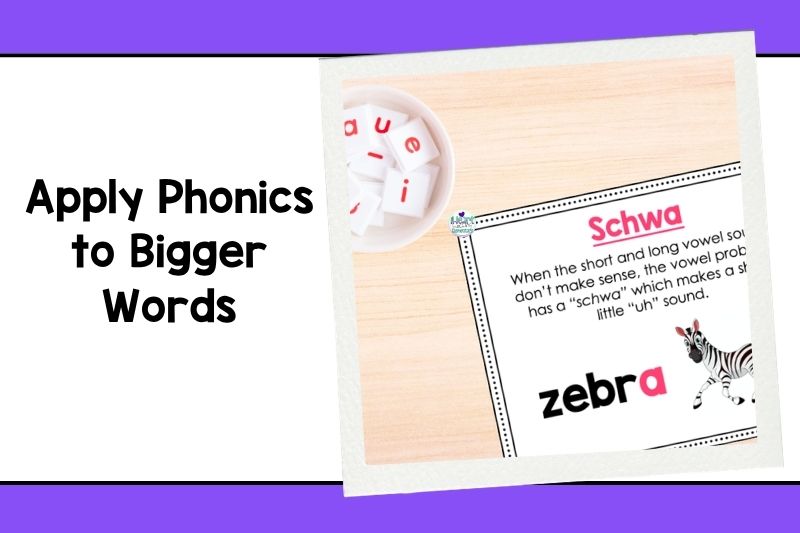
Applying Phonics to Bigger Words
Many students can confidently read one-syllable words, but they struggle when they see a longer word.
It’s easy to assume they’re struggling with phonics, but it could be that they don’t yet have a clear strategy for breaking a word apart and working through it.
So instead of trying to read the word, they might guess or skip the word altogether.
Teaching students how to break words into syllables gives them a process they can rely on. It helps them take what they already know about phonics and apply it in a way that supports the more complex reading they are doing.
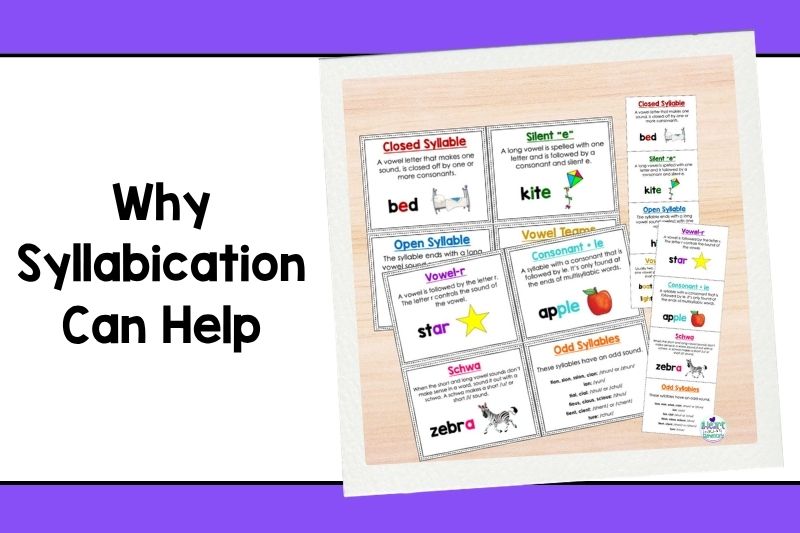
Why Syllabication Can Help
When students learn how to divide words into syllables, longer words stop feeling overwhelming.
Let’s look at the word fantastic. If a student can identify the short vowel sounds, they can then identify the closed syllables: fan / tas / tic.
Each part is manageable and they can decode and blend the syllables together.
Syllabication can bridge the gap between isolated phonics skills and reading complex text. It gives students a way to approach words they’ve never seen before with confidence.
What This Can Look Like in Your Classroom
This doesn’t require a complete shift in your instruction. You’re not teaching brand new skills, you’re just helping students use what they already know.
One simple way to start is by modeling. When you come across a longer word during a read-aloud or shared reading, think out loud as you break it apart. Show students how you look for vowel patterns and decide where to split the word.
You can also build in intentional practice with word lists that focus on two, three, four and five-syllable words.
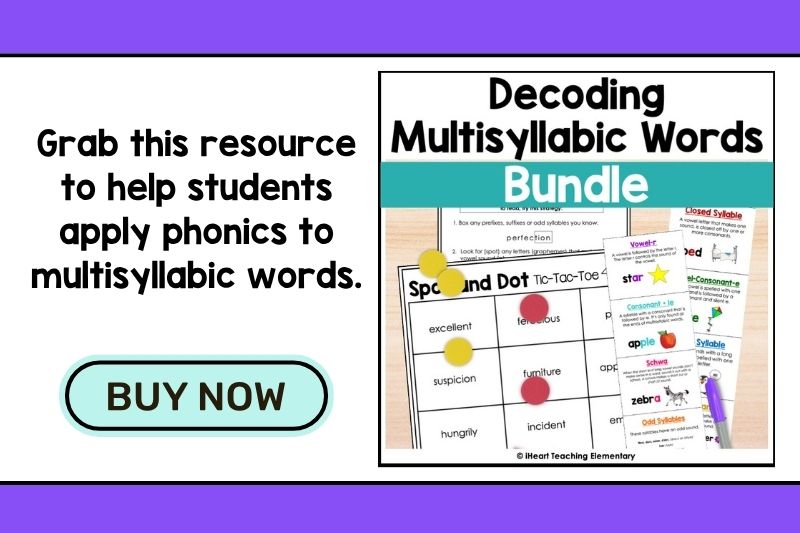
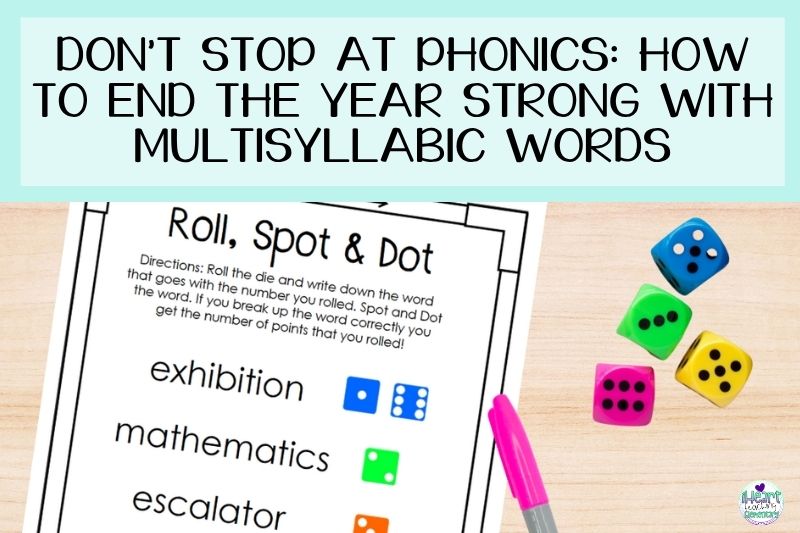
Turning this work into games can make it more fun. Games like Tic-Tac-Toe or games that include dice keep students engaged while reinforcing the skill.
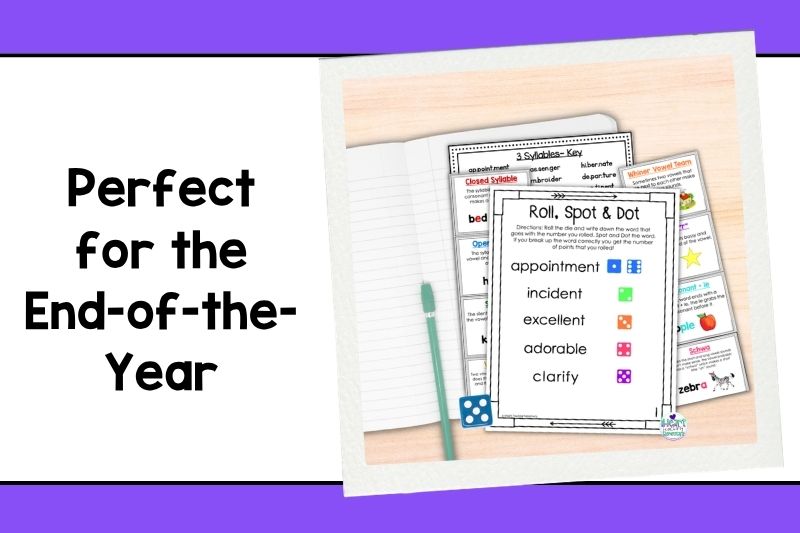
Why This Is Perfect for the End of the Year
By the end of the year, students are ready for something different, and you probably are too. But you still want learning to feel meaningful.
Working with multisyllabic words does both.
It gives students a new challenge without introducing entirely new content. More importantly, it helps solidify everything they’ve learned throughout the year and prepares them for the demands of reading to learn next year.
Once students learn how to break apart longer words, you’ll not only see improvement in their reading, but in their overall confidence as readers.
If you’re short on time this time of year, having something ready to go can make implementing this much easier. Here’s a resource that’s quick to prep and you can start using it right away.