Teaching word parts like prefixes and suffixes doesn’t have to take a ton of time. And it definitely doesn’t have to mean adding another program or complicated routine to your day.
There are simple, low-prep ways to weave morphology into what you’re already doing during your literacy block.
Even a little daily practice can help students build a stronger understanding of how words work, which supports both decoding and vocabulary.
Here are three quick ideas you can start using right away.

Quick Morphology Warm-Up
Start your day with a short and simple word part warm-up. Choose one prefix or suffix and introduce it during morning meeting or right before your read-aloud.
Define it, give an example word, and use it in a sentence.
Here’s how that might look:
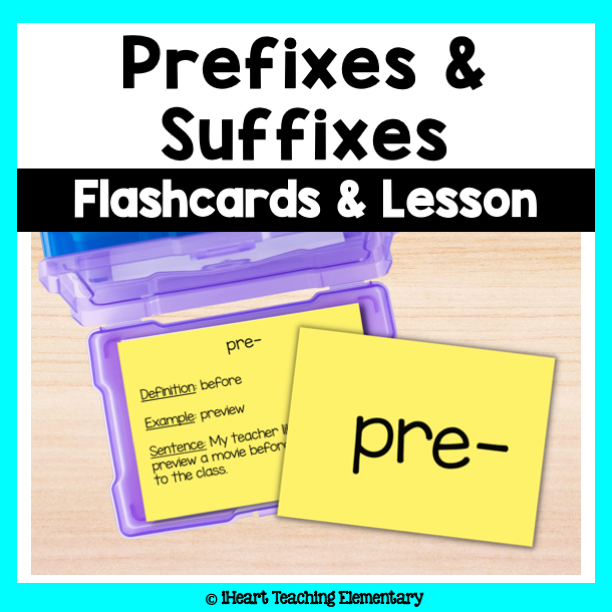
Definition: before
Example: preview
Sentence: My teacher likes to preview a movie before she shows it to the class.
It only takes 2–3 minutes, so it’s easy to implement daily.

Add Quick Word Part Chats to Small Groups
During small group time, take a minute to spotlight a word with a prefix or suffix from your text. Break it apart together and talk about what each part means.
Here’s how that might look:
If you come across the word unfamiliar, pause and ask:
“Familiar means well known. If un means not, what does unfamiliar mean?”
You can keep it quick, or take it a step further by having students build or sort words with the same prefix. It’s a simple way to build meaning and decoding skills right into your small group routine.

Word Work Center with Prefix and Suffix Cards
Create a word study center that gives students meaningful practice with word parts, without needing a lot of guidance from you. Use prefix and suffix cards students can work with independently.
They can:
- Match base words with prefixes or suffixes
- Build silly sentences using the new words they create
- Sort by meaning, like “not,” “again,” or “able to”
- Play a game like memory to allow kids practice in fun way
These are easy ways to keep word study practice fun and hands-on while you work with small groups.
You don’t need a big block of time to start teaching morphology. A few minutes here and there, like during morning meeting, small groups, or centers, can make a big difference in how your students decode and understand new words.
These quick routines keep word work meaningful, manageable, and engaging.
If you’re interested in some ready-made resources to help you do that check out these resources:

📌Pin this post to save for later: