Math games are a great way to keep students engaged but they can also be used for differentiation. And you don’t need to create separate versions of the same game or prep a bunch of extra materials to meet your students’ needs.
With just a few small shifts in how you use the game, you can easily adapt it for different levels of support, challenge, and independence.
Whether you’re working with partners, the whole class, or small groups, here are three ways to differentiate math games.
Switch Up Partners
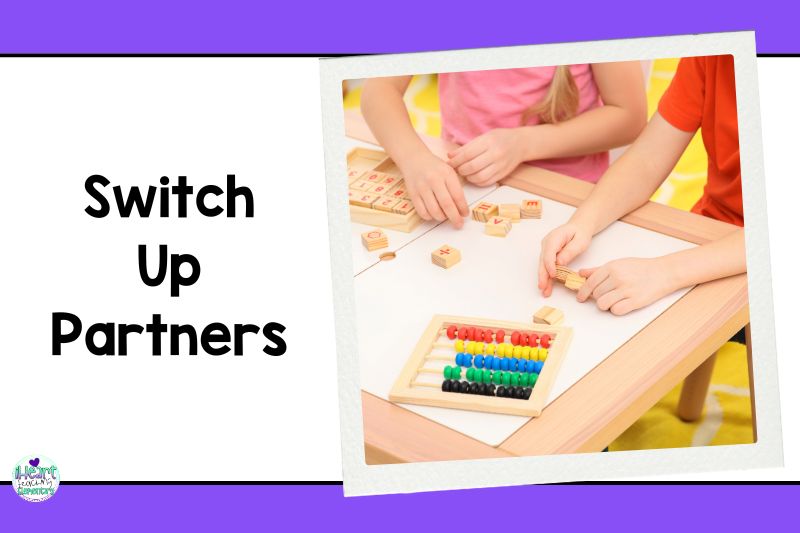
One of the easiest ways to differentiate a math game is by being intentional with how you pair students. You might group students with different strengths, mix skill levels, or match kids who approach math in different ways.
The game or activity itself doesn’t have to change, but the learning experience does.
Over time, rotating partners also exposes students to a wider range of strategies and ways of thinking.
It’s a simple way to make the same game feel supportive, challenging, and fresh, without adding to your prep.

Change the Instructions, Not the Game
Another easy way to differentiate is by tweaking how the game is played, not the game itself.
Students who are ready for a challenge might:
- Play in timed rounds
- Solve problems mentally
- Track bonus points for accuracy or strategy use
Students who need more support might:
- Use manipulatives to solve problems
- Reference number lines or strategy posters
- Take turns solving together with a partner
Everyone’s playing the same game or doing the same activity, but the expectations shift slightly to meet students where they are.

Use It in Small Groups with a Specific Focus
In small groups you can use the exact same game with different groups of students.
With one group, you might slow things down, model strategies step-by-step, and talk through each move together.
With another group, you can give them more independence and let them play at a faster pace, or try out advanced strategies.
It’s the same game but different goals. And the only prep you need to do is figure out what scaffolds or challenges students have access to.
You don’t need to reinvent the wheel to meet the needs of all your students. With a few small tweaks like who students play with, how the game is played, or how you guide it in small groups, you can turn any math game into a flexible tool for differentiation.
The great thing is that you’re using what you already have. No extra versions. No piles of materials. And every student gets what they need.
If you’d like some math games that are fun and easy to prep, check out these games:


📌 Pin this post to save for later: