
Practicing multisyllabic words can feel dry if the kids aren’t engaged. And when it feels boring, they usually won’t put in their best effort.
With simple, engaging activities, you can give students plenty of multisyllabic word study practice while keeping them interested and motivated.
Here are five fun ways to make multisyllabic word study something your students actually look forward to.
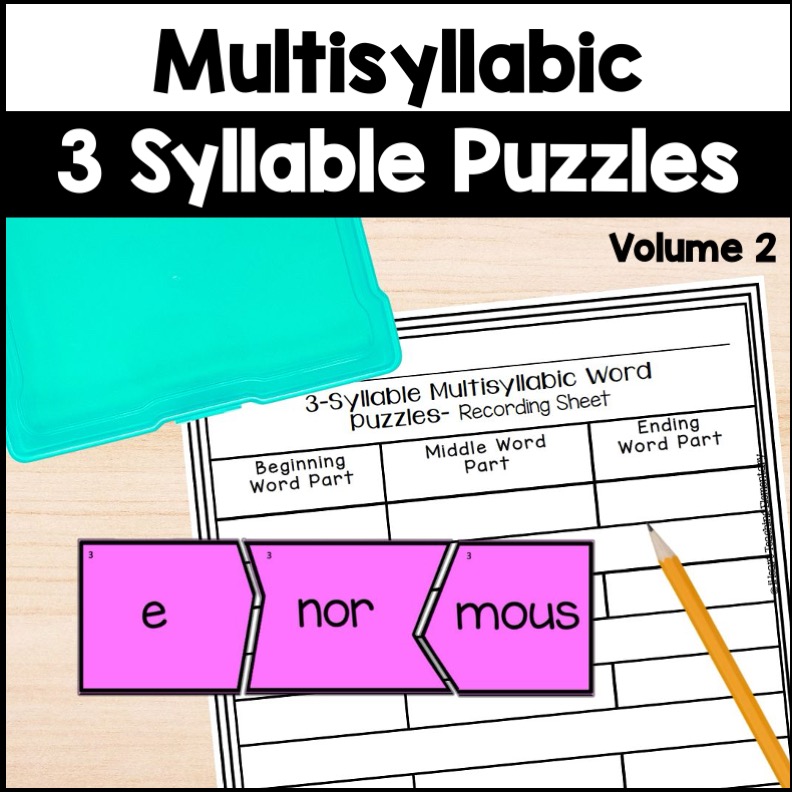
Multisyllabic Word Puzzles
Turn word study into a hands-on activity with multisyllabic word puzzles. Give students puzzle pieces that break words into syllable-sized chunks.
Students work together or independently to match the pieces and build complete words. When they finish a word, they practice reading it.
This activity is collaborative, tactile, and sneaks decoding practice. Kids love the puzzle aspect, and you get to hear them talk through syllable patterns and practice decoding in a low-pressure way.

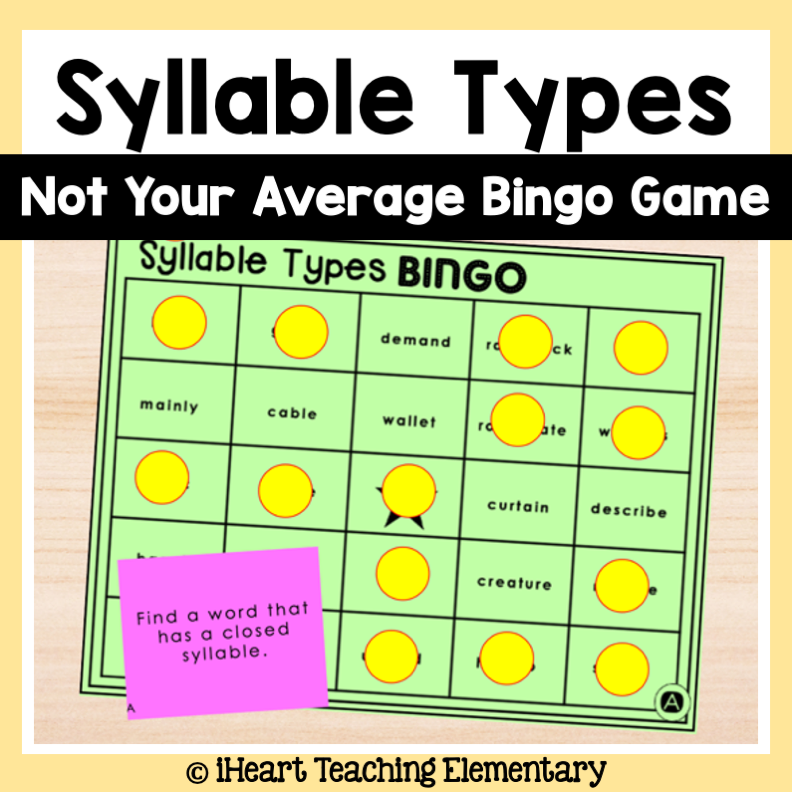
Syllable Types Bingo
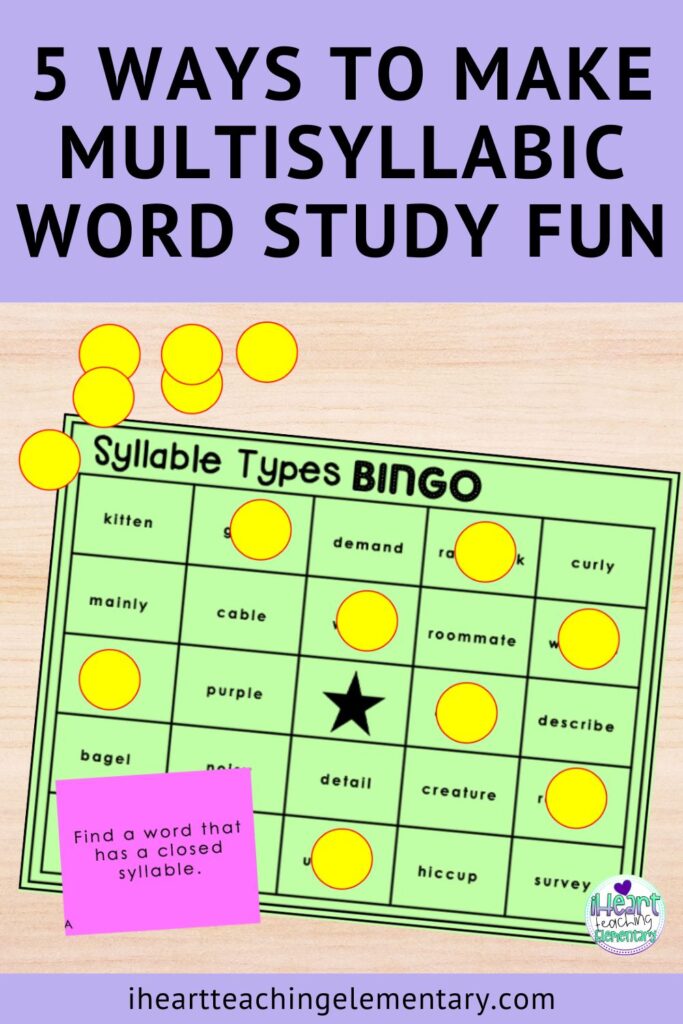
Bingo is a game kids love and works well with syllable types. Fill the board with multisylalbic words. Create calling cards that ask kids to find a type of syllable.
For example, one of the words on the bingo board is wallet. The calling card asks kids to find a word with a closed syllable. They can place a counter on the word wallet because that word has two closed syllables: wal-let.
You can add a twist, by adding in calling cards that tell kids to take off a counter from their board. This adds a lot of fun to the game!
The player that gets 5 in a row, first, wins!
Memory Matching
Play the classic memory game with multisyllabic word cards. Students flip over two cards, and if they find a match, they read the word, record it and keep it.
This gives them practice decoding and encoding (spelling) words with multiple syllables.
You can play this with 2-4 players in a small group or with one student with the teacher being the other player. The player with the most matches at the end of the game wins!
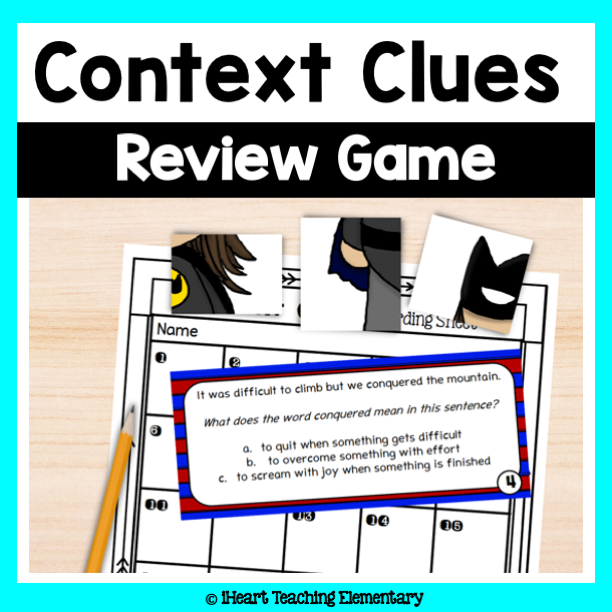
Context Clues Game
Add in comprehension practice to multisyllabic word study with a context clues game. Students move around the room and figure out word meanings using context.
As they get correct answers, they collect puzzle pieces.
You can play this in a way that works best for your students, but to add a fun challenge, you can see which team completes their puzzle first.
This game can also be played digitally using Google Forms. This works really well for kids that need to work independently.
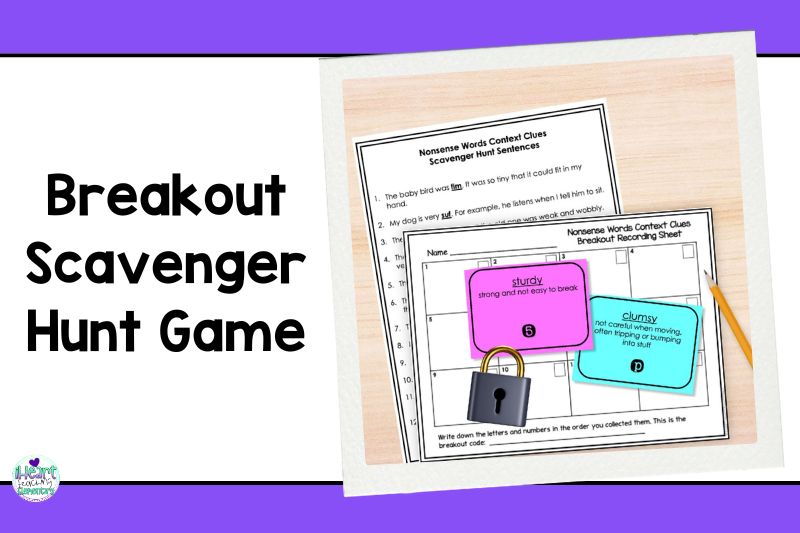
Nonsense Words Breakout Scavenger Hunt
Another fun way to practice context clues is with a breakout type of scavenger hunt. Students walk around the room and figure out nonsense word meanings using context clues.
As they figure out word meanings,, they collect letters or numbers for a code. This code will be how they break out.
You can use any nonsense words you want because the goal is for kids to practice using context to figure out the meaning. So you can build the sentence around random nonsense words.
You can differentiate it by making it a shorter breakout code or giving a time limit. When the student has all the correct letters or numbers of the code, they break out of reading class!
Practicing multisyllabic words doesn’t have to feel like another chore or a boring drill for your students. With activities like puzzles, games, bingo, and scavenger hunts, you can turn decoding practice into something kids enjoy.
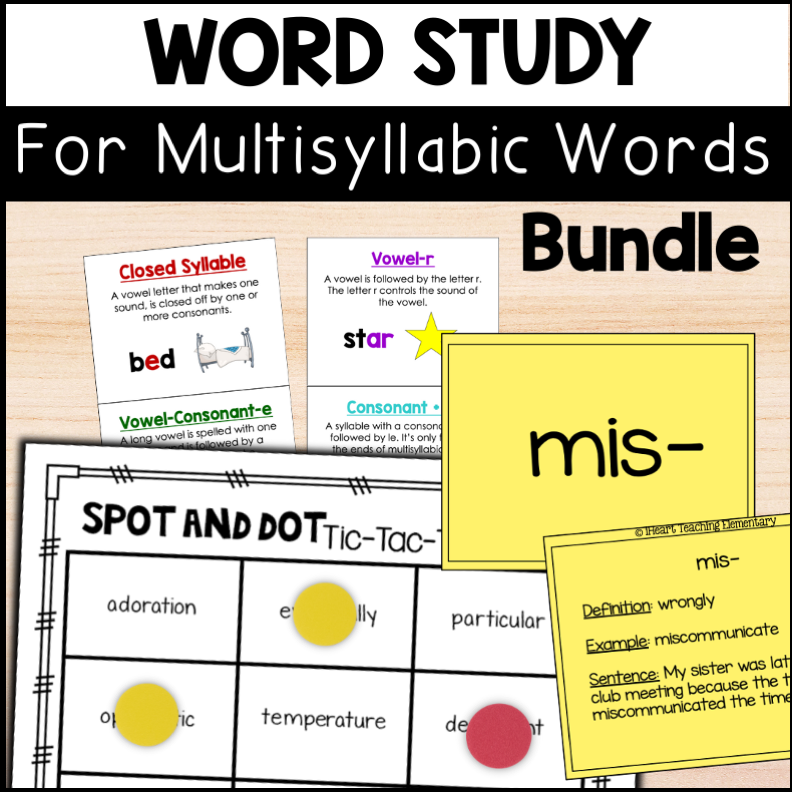
If you’re interested in done-for-you resources to help make multisyllabic word study fun, check out the resources highlighted in this post:


📌 Pin this post to save for later:

These are awesome and can’t wait to try out!
Thank you Annie, I’m glad you found these helpful!